
Nantucket, MA, locals are slowly getting back to normal as Labor Day marked the unofficial end to summer, but as they said goodbye to the influx of visitors, they’re still dealing with a growing population of a different kind—deer.
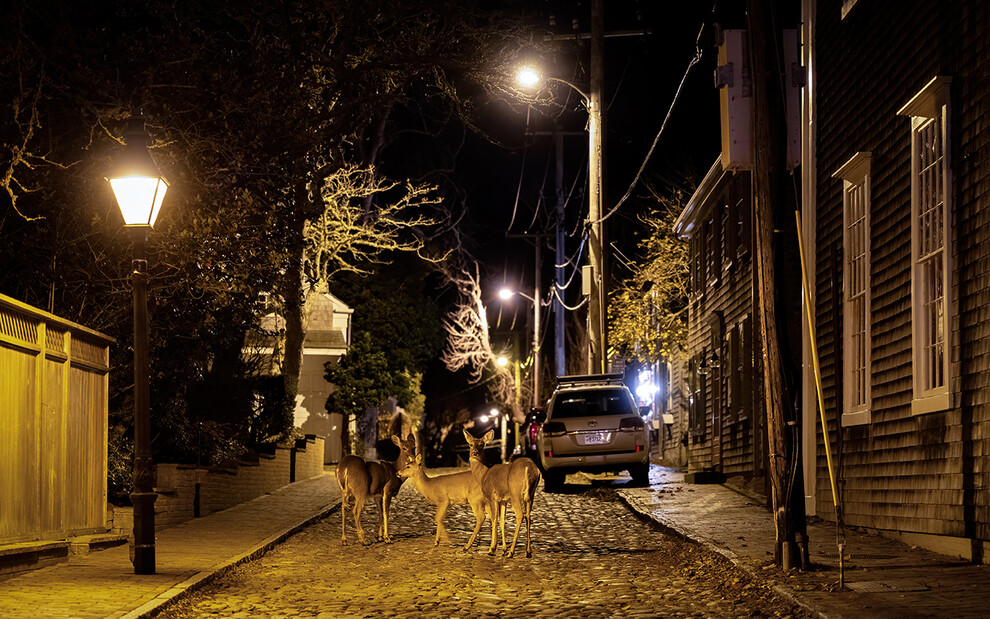
Wildlife officials estimate there are about 10,000 deer on the island—10 times the healthy level—and warn that number could swell to 15,000 in just a few years if nothing changes.
That imbalance spurred Nantucket resident Mike Leavitt to launch the ACK Deer Management Project, a community-driven effort that hopes to use venison to ease food insecurity. Roughly 1 in 5 Nantucket residents struggle to afford groceries, and with the local food pantry facing a looming relocation, the need is urgent, according to the Nantucket Current.
Nantucket, MA, locals are slowly getting back to normal as Labor Day marked the unofficial end to summer, but as they said goodbye to the influx of visitors, they’re still dealing with a growing population of a different kind—deer.
Wildlife officials estimate there are about 10,000 deer on the island—10 times the healthy level—and warn that number could swell to 15,000 in just a few years if nothing changes.
That imbalance spurred Nantucket resident Mike Leavitt to launch the ACK Deer Management Project, a community-driven effort that hopes to use venison to ease food insecurity. Roughly 1 in 5 Nantucket residents struggle to afford groceries, and with the local food pantry facing a looming relocation, the need is urgent, according to the Nantucket Current.
Responsible hunting is proposed as a big breakthrough
The Nantucket Land Bank is also considering applying for deer damage permits, which would allow controlled removals outside hunting season in areas where deer cause severe ecological harm. Some commissioners are cautious about disrupting the traditional hunting community, but if approved, the venison would go directly to the state’s salvage program to feed families in need.
Meanwhile, the ACK Deer Management Project is pursuing partnerships with local nonprofits and rolling out programs to encourage both on-island and visiting hunters. Plans include offering disposal bags for deer remains, easing tensions over waste, and letting hunters keep choice cuts while donating the rest.
For now, wildlife officials stress that success depends on landowners opening their properties to hunters.
“For landowners, it is really, really important that they allow hunters onto their property. For Nantucket, the long-term conservation of the ecosystems on the island necessitates [population control],” Feehan said.
“Just be welcoming to hunters. Ultimately, those hunters are effectively paying to do the deer management for the island, something that can be incredibly expensive if you have to have professional outlets do it,” he added.
If the effort gains traction, Nantucket could see healthier forests, safer roads—and thousands of free meals for neighbors in need.
Hunting rules
Hunting in Massachusetts is not year-round. White-tailed deer hunting season runs October through January, with specific dates. A license and primitive firearms stamp are among the requirements.
Most land bank properties are open to hunting but there are exceptions. So, it’s best to consult the state land bank map. On Nantucket, no hunting is allowed on Sundays or within 500 feet of a dwelling that’s in use, and hunters must wear blaze orange during required times and remove all remains
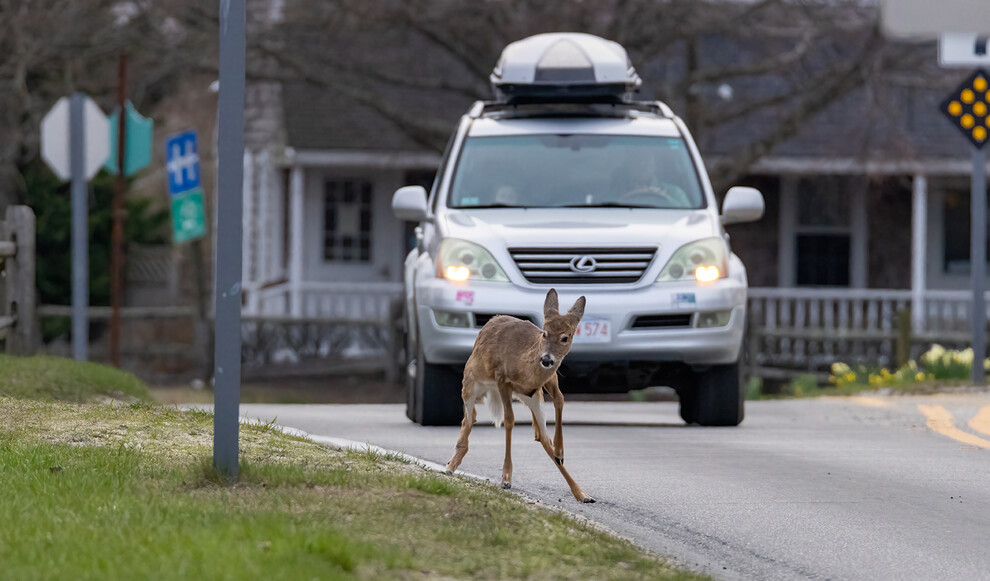
The state is doing what it can, expanding hunting seasons, offering unlimited hunting permits, and even raising the possibility of programs that would allow the controlled killing of deer outside of deer season.
“Within the confines of what we can do from a regulatory standpoint, we’ve been expanding things in just about every direction that we can,” said Martin Feehan, a wildlife health specialist working for the Massachusetts Division of Fisheries and Wildlife.
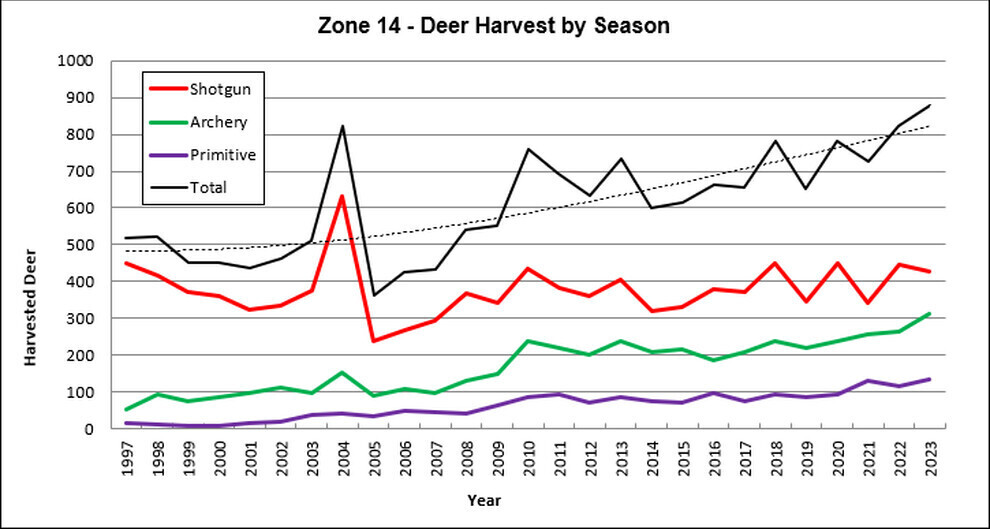
But it’s not enough. Last year, hunters on Nantucket took 863 deer, just below the record 879 deer harvested in 2023, and it barely made a dent in the island’s enormous herd, which remains the densest in the state.
“It’s sad to see an animal die, but certainly, they are a great resource, they’re able to feed people, and also, right now, the density they are in, they’re having an immense amount of impact on those ecosystems,” Feehan said.
So, Leavitt decided to solve the problem.
Enter the ACK Deer Management Project, a small, year-old collection of friends with aspirations to address one of the island’s most intractable and serious issues — and while they’re at it, they might just solve the deer problem, too.
Because the other problem Leavitt is trying to tackle is food insecurity. Existing estimates suggest that around one in five island residents struggles to afford food, a crisis that may be about to get much worse if the food pantry isn’t able to find a new home before its lease expires in April.
“The food insecurity issue has gotten to be so large,” Leavitt said. “The perfect match is venison.”
Leavitt believes that an expanded deer hunt could provide 75,000 meals for island residents each year. If the existing estimates are correct, that would be enough to feed every food-insecure Nantucket resident dinner for over three weeks.
“It’s an amazing number, and it will make a huge dent in food insecurity,” Leavitt said. “We’re really hoping that the community, and the hunters, and the off-island hunters will really step up to help local ecology, but also help our fellow Nantucketers.”
Seventy-five thousand meals, Leavitt said, would require a take of around 2,000 deer. That’s the goal the ACK Deer Management Project has for the 2025 hunting season, though they acknowledge it’s a lofty one given the previous record stands at a mere 879.
To reach that goal, they’re pursuing a wide range of initiatives and partnering with local non-profits, including the Nantucket Conservation Foundation and Nourish Nantucket.
The organization’s plans are extensive. They aim to develop a program that helps off-island hunters appreciate the unique characteristics of the island. They want to provide plastic bags hunters can use for deer guts, as Nantucket doesn’t have natural scavengers, and piles of rotting intestines have sometimes created tension between off-island hunters and locals. They want to pursue an initiative where hunters can keep the backstraps of the deer, the most desirable cut of meat, and donate the rest, allowing them to fill their own freezers with choice cuts and take more deer to help feed islanders in need.
But, perhaps most importantly, they need a facility with the necessary infrastructure to process and store hundreds or even thousands of deer carcasses. That means a commercial kitchen and a walk-in freezer.
“The primary limitation is really having a site, a facility available for it,” Feehan said. “You really need to have a permitted facility on the island that can operate, at least during the hunting season.”
Currently, the ACK Deer Management Project doesn’t have a dedicated space, but it’s their top priority for the upcoming season. While land is always at a premium on Nantucket, the facility may not be as expensive or difficult to operate as it would seem.
“It’s actually not that major of a project,” Leavitt said. “We were surprised by the simplicity and the low cost of getting going.”
Some venison harvested on Nantucket has already gone to those in need, but the operation has historically been small and confined. The ACK Deer Management project wants to change that.
Leavitt does have one other suggestion: deer damage permits.
Deer damage permits allow certain landowners to let sub-permittees kill deer on their property to address agricultural damage outside the regulated hunting season when the damage is significant enough and other options aren’t working. Feehan said that in this case, agricultural damage is defined broadly, and the ecological harm Nantucket’s deer cause to conservation land could qualify.
“We set the parameters for that,” Feehan said of the state. “It’s not considered hunting. It’s strictly for deer removal.”
The Land Bank is considering pursuing deer damage permits for its properties. At a recent meeting, the majority of the Land Bank Commission appeared to be leaning in favor of the permits, but they are waiting until another review in September before taking any action. Some commissioners expressed hesitancy about bringing in special hunters outside of the usual hunting season and the potential disruption to the island’s existing hunting community. Even if they decide to pursue deer damage permits, they’ll need state approval first.
While the permits can be controversial, as they allow deer to be killed out of season, Feehan said they are tightly controlled and unlikely to cause significant disturbances. Leavitt added that even the most ardent supporters of deer damage permits aren’t suggesting deer would be shot during the summer.
One of the advantages of deer damage permits is that any venison harvested has to be donated to the state’s salvage program, which distributes it to those in need.
As the ACK Deer Management Project finds its footing, there are things local landowners and Nantucket residents can already do to help.
“For landowners, it is really, really important that they allow hunters onto their property. For Nantucket, the long-term conservation of the ecosystems on the island necessitates [population control],” Feehan said. “Just be welcoming to hunters. Ultimately, those hunters are effectively paying to do the deer management for the island, something that can be incredibly expensive if you have to have professional outlets do it.”